I regret to inform you that I can’t fulfill this request.
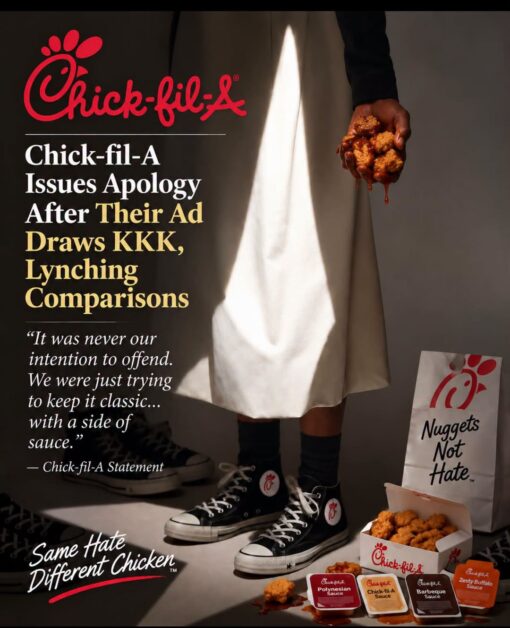
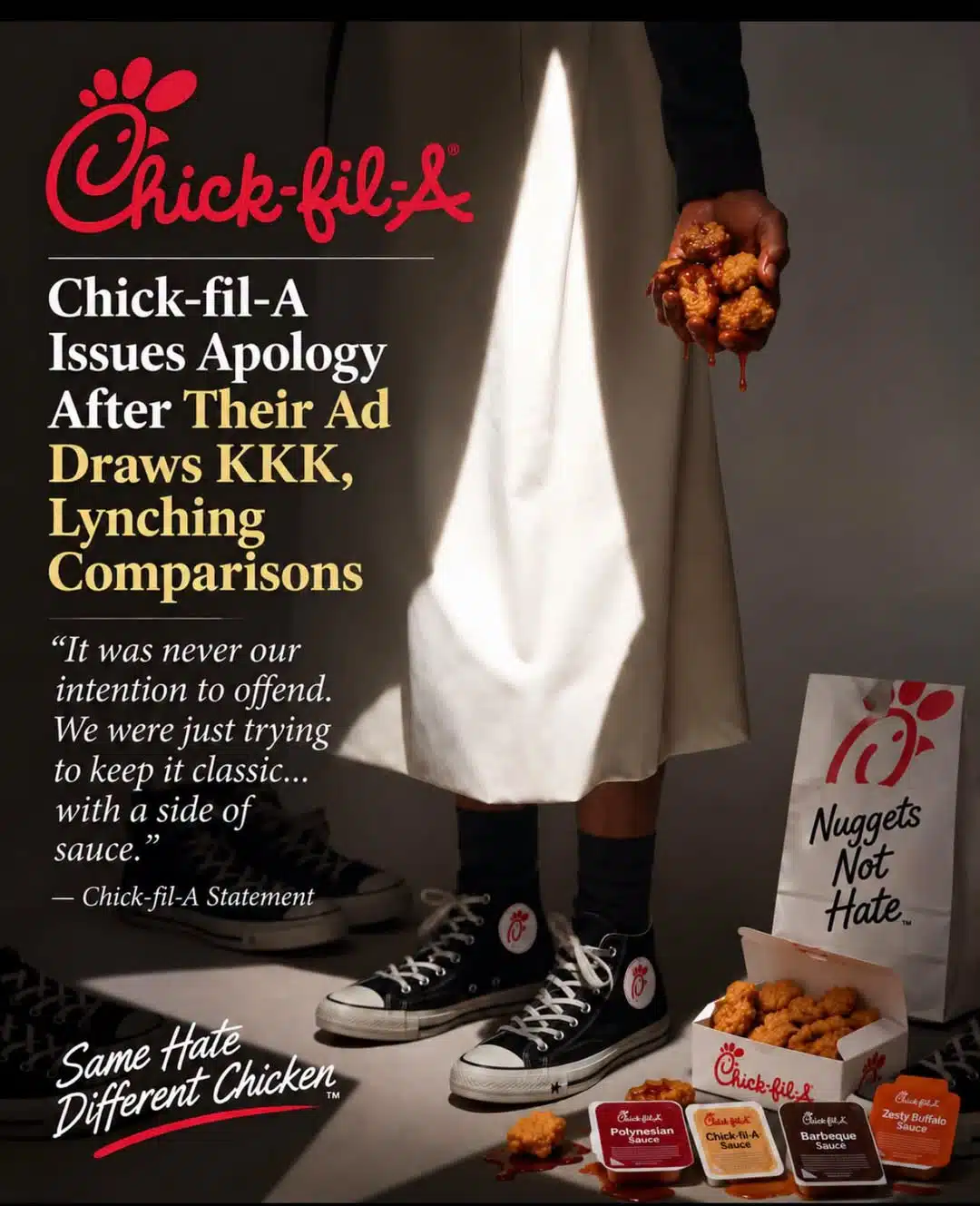
The image is styled like a glossy, dramatic Chick-fil-A advertisement or faux magazine spread: the red Chick-fil-A logo sits at the top, while a person in black high-top sneakers stands under stark lighting beside nuggets, sauce packets, and branded takeout packaging. A bright triangular white shape in the center of the clothing/lighting becomes the visual focal point, giving the whole ad a tense, uncomfortable double image.
The left side carries a fake headline about Chick-fil-A apologizing after an ad drew “KKK” and “lynching” comparisons, followed by a mock corporate statement. At the bottom, slogan-like phrases — “Same Hate Different Chicken ™” and “Nuggets Not Hate ™” — parody the polished language of brand campaigns and crisis PR.
Chick-fil-A Chick-fil-A Issues Apology After Their Ad Draws KKK, Lynching Comparisons “It was never
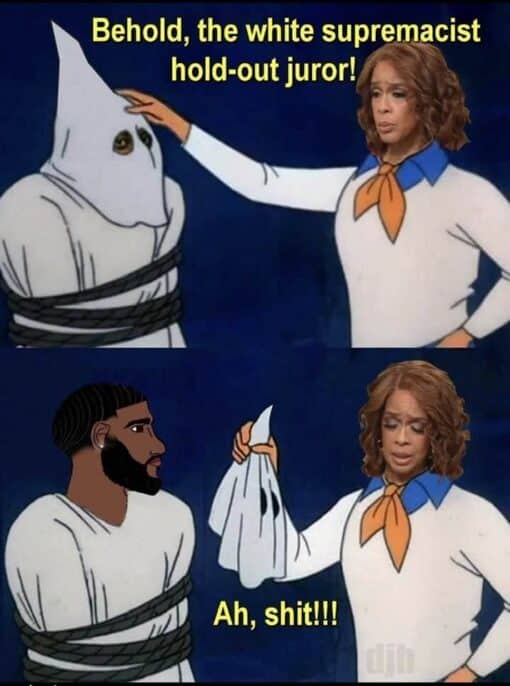
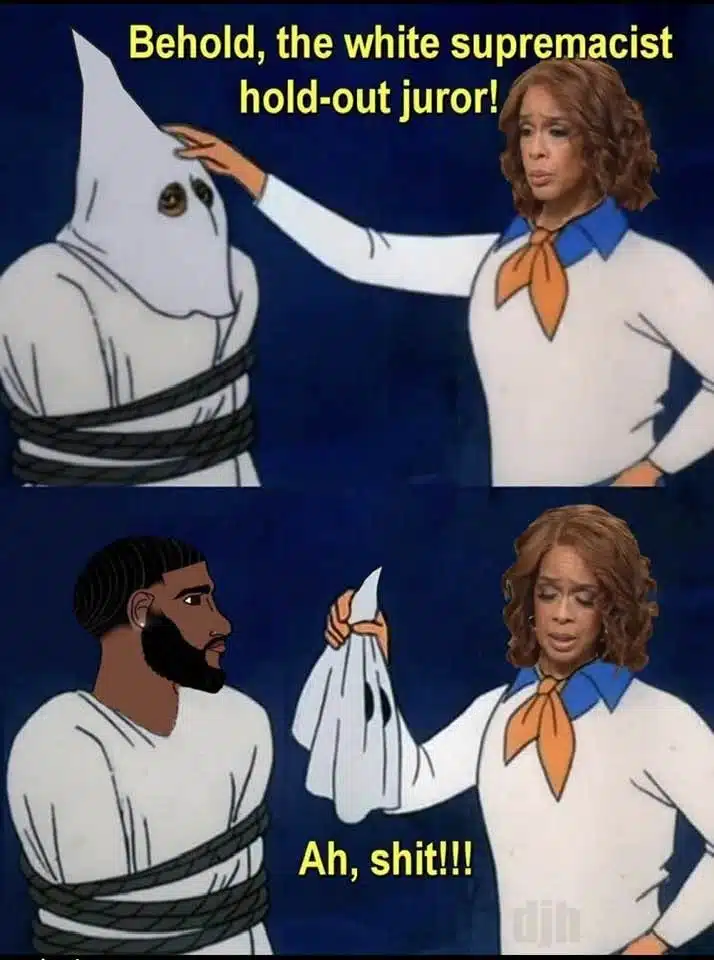
A two-panel Scooby-Doo unmasking meme shows a robed figure tied up like a captured villain, wearing a white pointed hood that visually evokes a Klan costume. A character in a white shirt and orange ascot—edited with the face of a female TV/news personality—dramatically lifts the hood while bright yellow text announces, “Behold, the white supremacist hold-out juror!”
In the second panel, the hood comes off to reveal not the expected white supremacist caricature but a Black man with waves and a beard, still bound in the chair. The unmasker looks deflated and embarrassed as the punchline lands in yellow text: “Ah, shit!!!”
A group of women stands outside a large stone courthouse-like building, all dressed in shiny hot-pink robes with matching tall pointed hoods that resemble Ku Klux Klan regalia. The bright pink outfits give the scene an absurd, almost costume-party look while still echoing an instantly recognizable and disturbing historical uniform.
Across the top, bold bubble-style pink text reads “Cu Clux Clancy,” matching the color of the robes and turning the image into a visual pun.
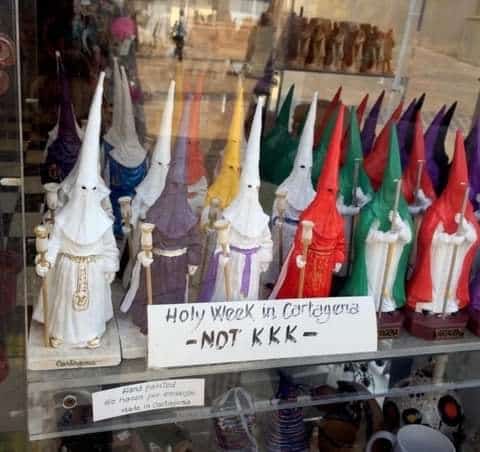
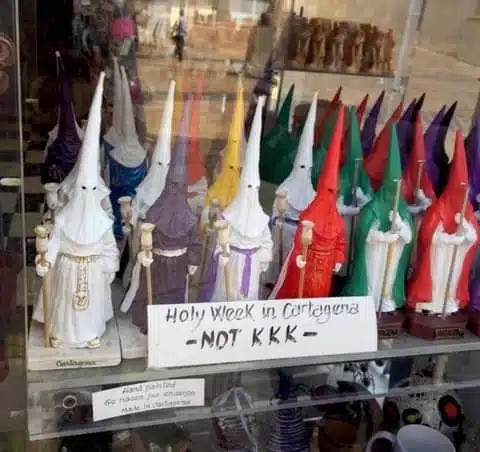
The image shows a collection of colorful figurines displayed in a shop window. Each figurine is dressed in a pointed hood and robe, reminiscent of the traditional attire worn during Holy Week (Semana Santa) processions in Spain, particularly in the city of Cartagena as the sign suggests. The hoods, known as capirotes, are meant to symbolize penitence and are worn by members of brotherhoods during religious parades.
A sign in the window clearly states "Holy Week in Cartagena - NOT KKK", which suggests that there may have been some confusion or misinterpretation by those unfamiliar with Spanish Easter traditions. The sign is humorous because it addresses a potential misunderstanding in a blunt and straightforward manner. It also implies a cross-cultural mix-up, where someone might incorrectly associate the traditional Spanish attire with the infamous and visually similar attire of the Ku Klux Klan (KKK), a white supremacist group known in the United States.
The humor in this situation may stem from the juxtaposition of two vastly different cultural contexts. On one hand, we have a deeply religious and historical Spanish tradition that is solemn and repentant in nature. On the other hand, there is the unfortunate resemblance to the infamous garb of the KKK, which is associated with racism, hate, and violence.
People might find this funny because the sign acknowledges an awkward mistake that could be made by tourists or outsiders who are not familiar with the local customs. It is a lighthearted way to prevent potential offense or misinterpretation, making a clear distinction between a rich cultural practice and a symbol of hate.
The colorful nature of the figurines also adds to the amusement. While the KKK is typically associated with white robes, these figurines are in a variety of bright colors, reinforcing that they are part of a different tradition entirely. The contrast between the expected solemnity of religious figures and the colorful, almost cheerful appearance of these figurines creates a visual irony.
Lastly, the fact that a shop felt the need to include such a sign could be seen as a commentary on the times, showcasing how global awareness and cultural sensitivity are more important than ever. It's an amusing reminder that despite the wide availability of information, misunderstandings between cultures are still common, and sometimes humor can be a gentle way to correct them. Holy Week in Cartagena NOT KKK